Summer hydration is easy to remember. You’re hot, you’re sweating, you feel thirsty. The body’s signals are clear and the motivation to drink is built in. Winter is different. When it’s cold outside and you’re bundled up and your body isn’t obviously overheating, the urge to drink water mostly disappears. I’ve spent entire winter days barely touching a water bottle, only noticing something was off when my energy dropped or a headache arrived that had no other obvious explanation.
The thing is, your body is still losing fluid in cold weather. In some situations, it’s losing more than you’d expect. Understanding why cold reduces the perceived need to drink — without actually reducing the body’s need for fluid — is the first step to not getting quietly dehydrated all winter.
Why Thirst Disappears in the Cold
The thirst mechanism is temperature-sensitive in a way that works against you in winter. In hot conditions, the body’s primary concern is preventing overheating, and fluid loss through sweating is fast and visible. The thirst response kicks in early and insistently.
In cold conditions, the body’s priority shifts toward maintaining core temperature. One of the ways it does this is by constricting blood vessels near the skin to reduce heat loss — a process called peripheral vasoconstriction. This redistribution of blood toward the body’s core triggers a response in the kidneys that increases urine production, because the body’s fluid sensors detect what feels like excess fluid volume in the core. The result is that you feel less thirsty even as you’re losing fluid through urination at a higher rate than you might in moderate temperatures.
Cold air also contributes directly to fluid loss. Dry winter air causes faster evaporative moisture loss from the lungs with each breath — you can see this as visible vapor when you exhale on a cold day. At altitude, where winter outdoor activities often take place, this respiratory fluid loss becomes significant. Skiers and hikers operating at elevation in cold conditions can lose substantial fluid through breathing alone without any obvious sweating.
The combined effect: you feel less thirsty, you’re urinating more, and you’re losing fluid through breathing at an elevated rate. The signals that normally prompt drinking are suppressed. The result, for a lot of people, is mild to moderate dehydration that builds over the course of a cold day without ever triggering a clear warning.
The Signs That Show Up Differently in Winter
Dehydration in summer usually announces itself clearly: thirst, dry mouth, feeling hot, dark urine. In winter, the signals are subtler and more easily attributed to other causes.
Fatigue is one of the first signs, and in cold weather it’s easy to blame on the season, poor sleep, or the general heaviness that winter brings. Low-grade headaches that develop in the afternoon are another common indicator — I’ve learned to treat a winter headache as a hydration signal before anything else. Mental fogginess, reduced concentration, and irritability can all accompany mild dehydration, and in a cold office or on a long outdoor day, these get written off as environmental factors rather than recognized as physical ones.
The urine color test works in winter the same as summer: pale yellow is well-hydrated, darker shades indicate you need to drink more. It’s less convenient to check on a cold day, but it remains the most reliable real-time indicator.
What Changes About the Drinking Experience
Beyond the physiological reasons, there’s a practical one: cold water is genuinely unappealing when you’re already cold. In summer, reaching for a cold bottle is refreshing. In winter, it’s an active aversion. Cold water on a cold day feels like it makes the coldness worse, which means the bottles people carry go untouched for hours.
This is where the insulation argument flips. In summer, an insulated bottle’s main job is keeping cold drinks cold. In winter, the same insulation keeps hot drinks hot — which means you’re carrying something you actually want to drink when the temperature drops.
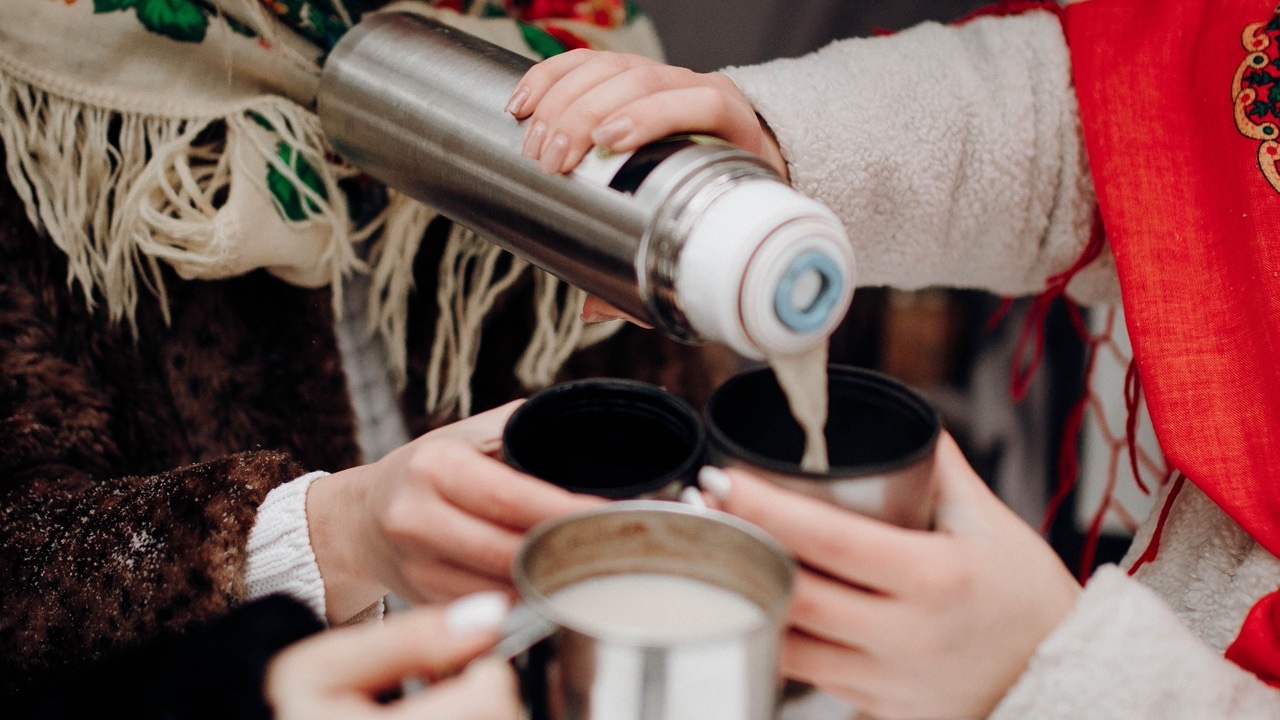
Hot water, herbal tea, or warm broth in a vacuum-insulated bottle turns drinking in cold weather from something you have to remind yourself to do into something you seek out. The psychological pull of a warm drink on a cold day is real, and it works in your favor for hydration in a way that cold water simply doesn’t.
The bottle that works for winter hydration is one with good enough insulation to keep a hot drink genuinely hot across a long outdoor day, not just lukewarm for an hour. A vacuum-insulated stainless steel bottle in a size large enough to matter — 750ml or larger — covers most situations where winter dehydration becomes a real risk: long hikes, ski days, extended time in cold outdoor conditions, or just a day in an office where the heating creates dry air and nobody’s thinking about water.
Building the Winter Habit
The practical fix is similar to what works for hydration generally, with a cold-weather modification: switch to hot or warm drinks in the bottle rather than cold water, and be deliberate about it at the start of the day since thirst won’t remind you the way it does in summer.
Some people find that committing to a specific refill schedule works better in winter than relying on thirst — filling the bottle at the start of the morning and aiming to empty it before lunch, then refilling for the afternoon. The goal is to make drinking a routine rather than a response to a signal that isn’t going to arrive reliably.
For teams or organizations looking at this at scale — outdoor crews, athletes training through winter, schools and workplaces in cold climates — providing quality bulk insulated water bottles that are genuinely capable of keeping drinks hot is more useful than reminders and hydration posters. The equipment that makes drinking easy and appealing in cold conditions does more actual work than any messaging effort.
The Short Version
Cold suppresses thirst while dehydration continues. Dry winter air and cold-induced changes in kidney function accelerate fluid loss. Cold water is unappealing when you’re already cold, so it doesn’t get drunk. The solution is a good insulated bottle and hot drinks instead of cold ones — the same bottle that keeps water cold in summer keeps tea hot all day in winter. Switch the contents, keep the habit, and the problem mostly solves itself.