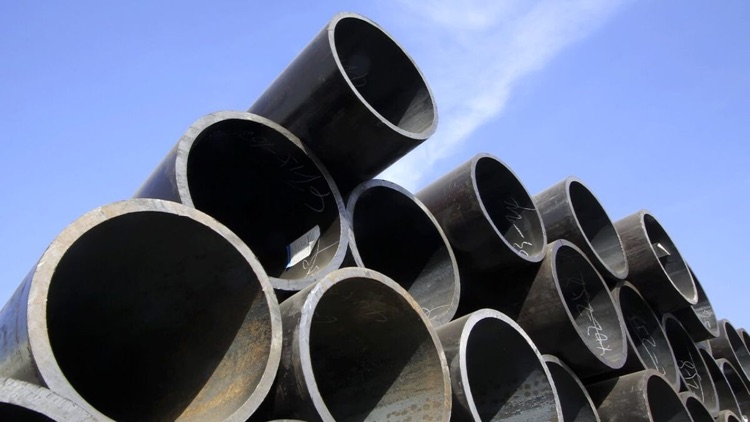
ASTM A106 Grade B seamless pipe is a carbon steel piping material that is specifically designed to serve in high temperature and high-pressure service. It is not an all-purpose pipe but is chosen in those systems where the safety of operations, stability of pressure, and long-term stability are essential.
Its seamless construction, unlike welded pipes, removes the weld seams that create weak points and enhances performance due to unremitting internal stress. Due to this, it is very common in industries where fluid, gas, or steam transportation should not be affected by extreme working conditions.
This article describes the application and the reasons for the astm a106 grade b pipe, and outlines real-world engineering factors that affect the choice in the actual project.
Oil and Gas Transmission Systems
ASTM A106 Grade B pipes are also popular in upstream and downstream processes in oil and gas infrastructure. These systems include the flow of crude oil, natural gas, and refined petroleum products at high-pressure.
Its selection is not solely due to strength, but also because it is good in terms of its integrity, as it changes with pressure changes that happen in long-distance pipelines and processing units. It is commonly installed in:
- High-pressure transfer lines in refineries
- Gas distribution networks between processing units
- Steam injection and recovery systems in upstream fields
Even a small leakage or structural breakdown in these settings can result in significant operational risks, so smooth construction is a crucial benefit.
Refinery Operations
One of the most demanding applications of ASTM A106 Grade B pipes is the refineries; heat, pressure, and chemical exposure make it a challenging application. These pipes are applied in a series of refining processes, such as crude distillation, catalytic processing, and steam systems.
In the real refinery layout, these pipes are placed in:
- Crude oil feed lines
- Intermediate product transfer systems
- High-temperature steam distribution networks
Their smooth design minimizes the chances of fatigue failure during continuous use, as is indispensable in refinery conditions where shutdowns are prohibitively expensive.
Power Generation and Boiler Systems
Thermal and boiler systems need high-temperature steam piping that can sustain constant high temperatures of the steam. In these systems, the pipes commonly used are ASTM A106 Grade B due to the fact that they can stand the test of time, even when subjected to high thermal conditions.
They are normally used in engineering applications in:
- Steam generation and distribution lines
- Boiler feedwater systems
- Heat recovery systems
One of the important considerations here is thermal stability. Repeated heating and cooling of pipes should not cause deformation or weakening; thus, ASTM A106 Grade B is best in long-term energy.
Chemical Processing Industry
The conditions under which chemical plants are run are extremely variable, with changing temperatures and the flow of various process liquids. ASTM A106 Grade B pipes are used where structural reliability is more important than corrosion resistance alone.
They are typically laid out in internal transfer systems between production units that need pressure stability. Nevertheless, other protective coatings or material lining can be applied in aggressive chemical environments, depending on the process needs.
The most important benefit in this industry is that of predictability in the mechanical behavior of controlled process conditions.
Manufacturing and Industrial Utility Systems
In general, plants, utility, and process support systems are made of ASTM A106 Grade B pipes, as opposed to direct production lines.
Typical applications include:
- Compressed air distribution systems
- Steam supply networks for machinery
- Cooling and process water lines
Operational reliability is the reason why it was selected in such environments. The production system needs continuous availability of utility, and the failure of the pipes can directly influence the production efficiency.
Boiler, Heat Transfer, and Energy Systems
Heat exchangers and boiler systems rely on the constant exchange of energy via piping systems. ASTM A106 Grade B pipes are chosen due to their ability to withstand high-temperature steam flow, maintaining structural stability.
The performance in these systems is not just in pressure resistance, but also in ensuring efficiency in heat transfer over time. This renders material consistency a very essential choice in energy-associated apps.
Conclusion
ASTM A106 Grade B seamless pipes are popular in various industries because they can be used in high-temperature and high-pressure environments. Their smooth construction offers greater strength, and they can be used in critical systems where failure cannot be tolerated in the system.
Oil and gas, petrochemicals, refineries, power generation, chemical processing, and manufacturing industries are some of the industries that depend on the pipeline to achieve consistent and durable operation.
The proper use is, however, dependent on the proper engineering choice, such as pressure rating, temperature limit, the schedule of the pipe, and system design specifications. Due to the appropriate consideration of these factors, ASTM A106 Grade B pipes offer safe, efficient, and long-term service in industrial infrastructure.